Japan Is Trying to Grow New Teeth: Could Tooth Regeneration Change Dentistry Forever?
Inside the science of USAG-1, TRG035 and the possibility of growing a biological replacement tooth
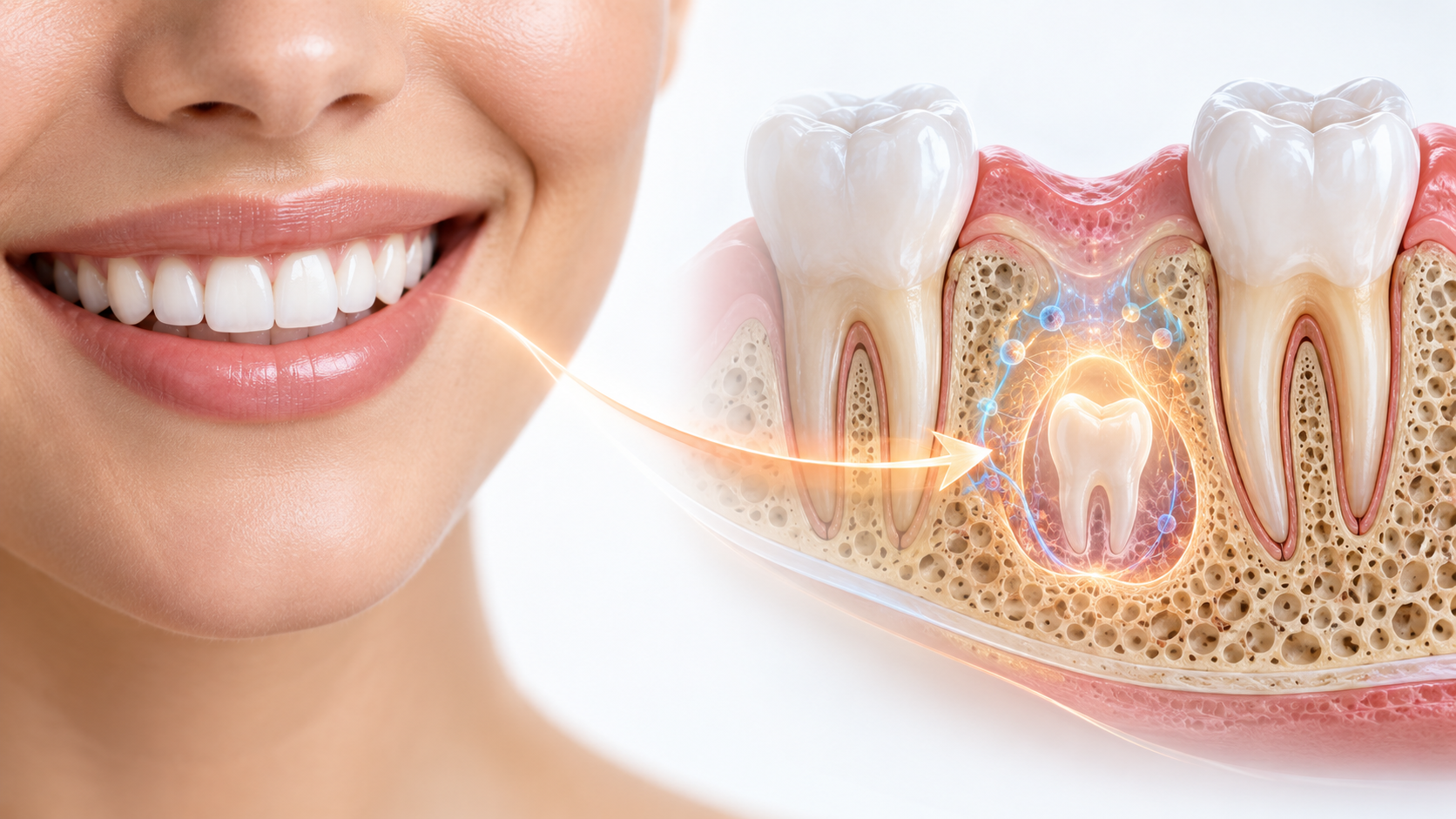
Japan Is Trying to Grow New Teeth: Could Tooth Regeneration Change Dentistry Forever?
Inside the science of USAG-1, TRG035 and the possibility of growing a biological replacement tooth
Imagine losing a tooth and being offered three choices:
- a denture
- a dental bridge
- an implant
Those have been the basic replacement options of modern dentistry.
But what if one day your dentist could add a fourth option?
Grow another tooth.
It sounds like science fiction.
Yet researchers in Japan are actively developing a drug designed to stimulate the body to form a missing tooth.
And in 2026, that research moved another important step toward testing the idea in the people who may eventually benefit from it.
Welcome to one of the most fascinating frontiers in regenerative dentistry.
First: Are Scientists Actually Growing Teeth in Japan?
Yes—but not in the way many headlines make it sound.
Researchers are not currently manufacturing perfect adult human teeth in a laboratory and implanting them into patients.
The Japanese approach is arguably even more interesting.
The goal is to encourage the patient's own biology to restart a developmental process that normally produces teeth.
The investigational medicine is called TRG035.
It is being developed by the Japanese biotechnology company Toregem BioPharma, which grew out of research involving Kyoto University and collaborators in Japan.
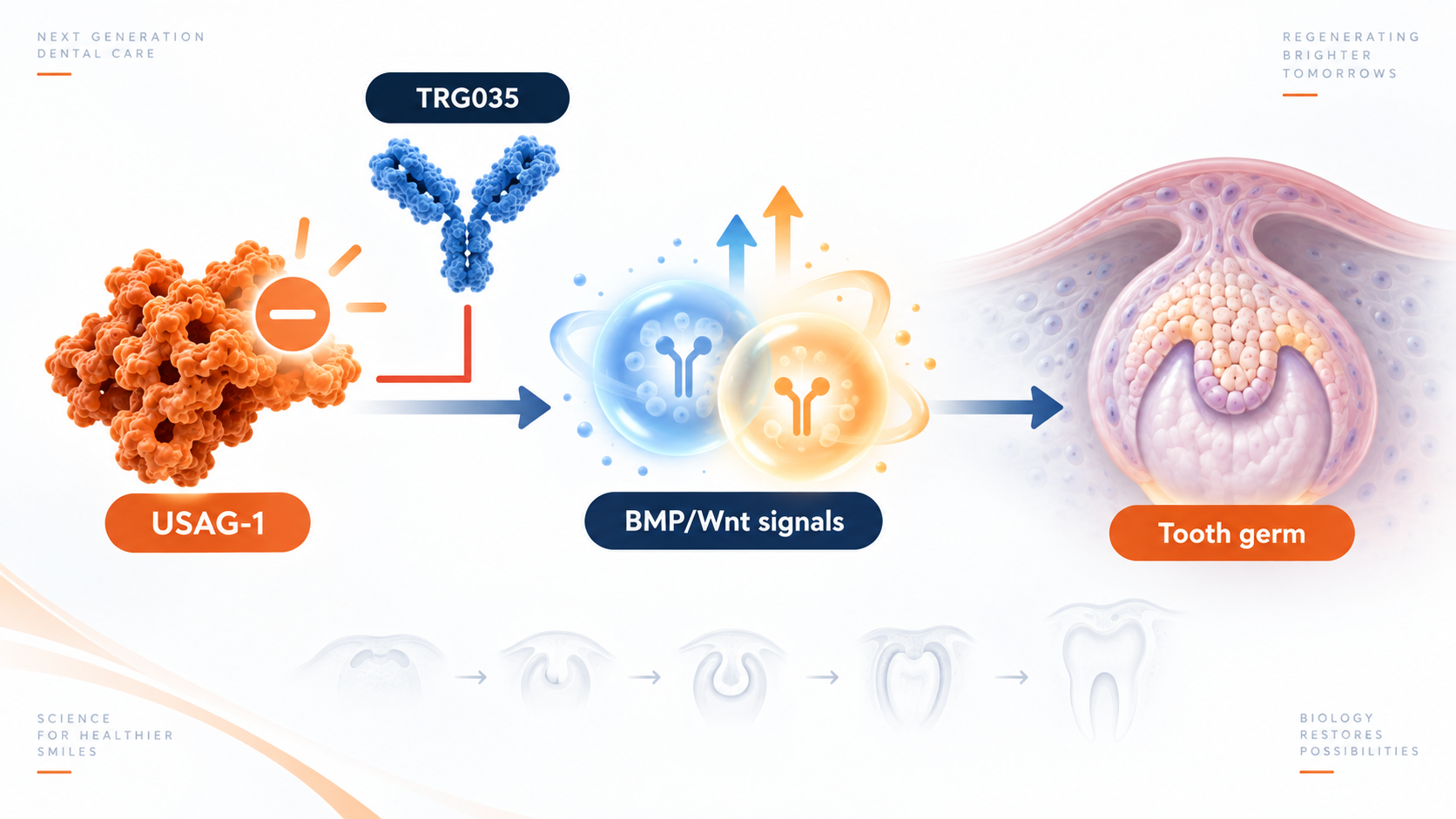
TRG035 is a humanized antibody designed to block a protein called USAG-1.
And USAG-1 appears to act like one of the biological brakes on tooth development.
Meet the Biological Brake: USAG-1
Building a tooth is an extraordinarily complicated biological process.
Cells have to communicate using developmental signaling pathways that determine where a tooth forms, how it develops and how many teeth eventually appear.
Two important families of signals involved in this process are BMP and Wnt.
USAG-1 interacts with these developmental pathways and helps suppress tooth formation.
Researchers therefore asked a fascinating question:
What happens if we temporarily release that brake?
That question eventually became the foundation of a potential tooth-regeneration drug.
Then Something Remarkable Happened
Before any experimental therapy reaches humans, researchers need evidence that the biological idea actually works.
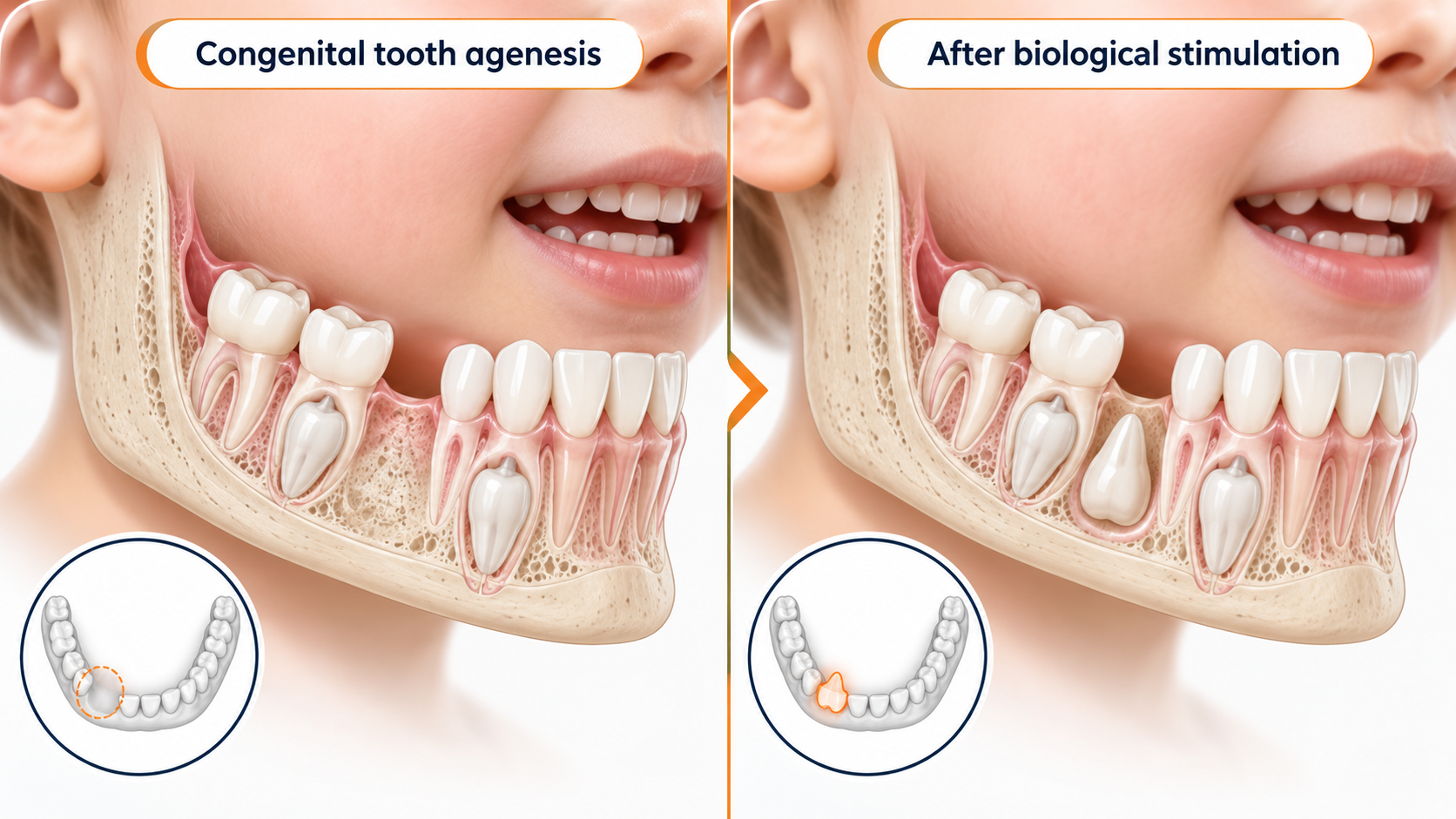
In mouse models of congenital tooth agenesis—conditions in which teeth fail to develop—researchers found that blocking USAG-1 could restore tooth formation.
Some experiments also produced supernumerary teeth: additional teeth beyond the normal number.
But mice are not humans.
So the researchers also studied ferrets.
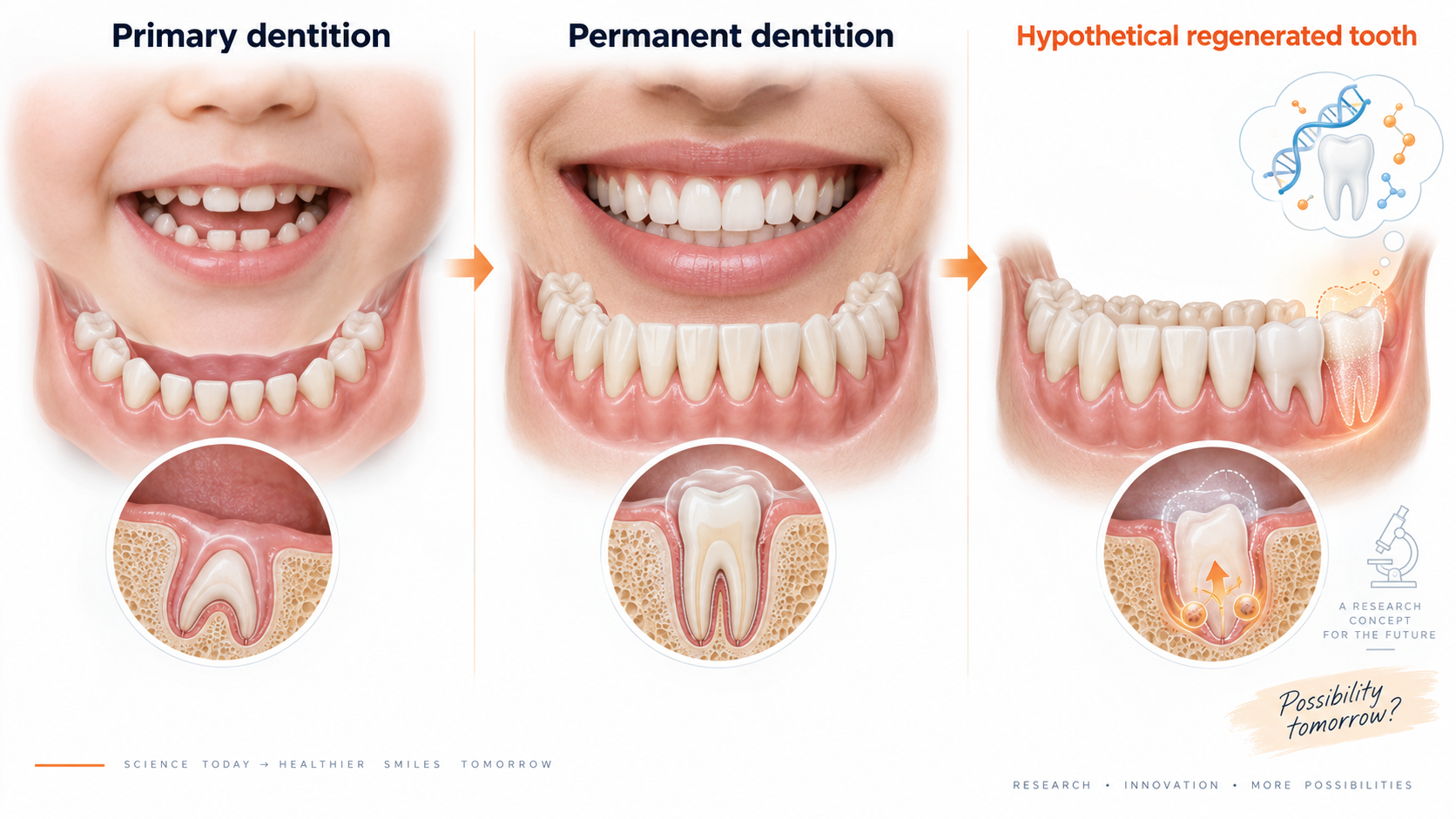
Ferrets are especially interesting because, like humans, they naturally develop deciduous teeth followed by permanent teeth.
After anti-USAG-1 treatment, researchers observed an additional tooth resembling what they described as a potential third dentition.
In other words, the experiment suggested that mammals may retain developmental potential for another generation of teeth.
Wait—Do Humans Have a “Third Set” of Teeth?
Most of us learn that humans have two dentitions:
1. Primary teeth
2. Permanent teeth
The Japanese research program is investigating whether developmental remnants associated with additional tooth formation can potentially be stimulated under the right biological conditions.
That does not mean every adult currently has a fully formed third set of teeth waiting underneath the gums.
Rather, the hypothesis is that dormant or developmentally arrested tooth-forming tissues may sometimes contain more potential than previously assumed.
The researchers are essentially asking whether biology can be persuaded to finish a job it stopped doing.
So Has a Human Being Grown a New Tooth Yet?
Not based on the clinical evidence available today.
This distinction is extremely important.
TRG035 has entered human clinical development, but the first human study was a Phase I trial in healthy adults.
The primary purpose of that type of trial is to investigate matters such as safety, tolerability and how the drug behaves in the body—not to prove that it can successfully replace missing teeth.
That Phase I study has now been completed.
The next major step is far more interesting.
In August 2026, Toregem announced that Japan's Pharmaceuticals and Medical Devices Agency had completed the required investigation of its clinical-trial notification for a planned Phase IIa trial of TRG035 in congenital tooth agenesis.
Further institutional review and clinical-trial processes are still required before the treatment can simply be considered available to patients.
So we have moved from “Can this grow teeth in animals?” toward “Can this safely and meaningfully help people who were born without certain teeth?”
Why Start With Children Born Without Teeth?
The first target is not the average adult who lost a molar from a cavity.
The initial focus is congenital tooth agenesis—a condition in which some permanent teeth never develop normally.
This can be especially challenging for children with severe forms of the condition.
Dental implants are often not appropriate while the jaws are still growing. Prosthetic treatment may therefore require years of maintenance and adaptation before definitive adult rehabilitation becomes possible.
A therapy that could stimulate development of the patient's own missing tooth would represent a completely different approach.
Instead of replacing the missing structure, medicine would try to restore the developmental process itself.
Could This Eventually Replace Dental Implants?
This is where the story becomes both exciting and speculative.
Toregem's long-term research vision extends beyond congenital tooth agenesis.
The company has discussed eventually investigating whether similar biology could help people who lose permanent teeth because of:
- tooth decay
- periodontal disease
- trauma
- other acquired causes of tooth loss
If biological tooth regeneration someday became predictable, safe and controllable, it could fundamentally alter restorative dentistry.
A regenerated tooth could theoretically offer something no current artificial replacement can completely reproduce:
a living biological tooth belonging to the patient.
That could potentially mean natural periodontal ligament attachment, biological sensation, adaptation to the surrounding tissues and integration with the jaw in ways fundamentally different from a titanium implant.
But there are major scientific questions that would have to be answered first.
Growing “A Tooth” Is Not Enough
Dentists do not simply need a random tooth.
We need the right tooth.
Imagine losing a lower first molar and growing something shaped like an incisor.
Interesting scientifically?
Absolutely.
Useful clinically?
Not particularly.
Future regenerative dentistry would need control over:
- where the tooth forms
- which type of tooth develops
- its size and shape
- root development
- eruption direction
- timing
- occlusion
- interaction with surrounding teeth
- long-term pulp and periodontal health
- the risk of unwanted extra teeth
In dentistry, regeneration has to be controllable—not merely possible.
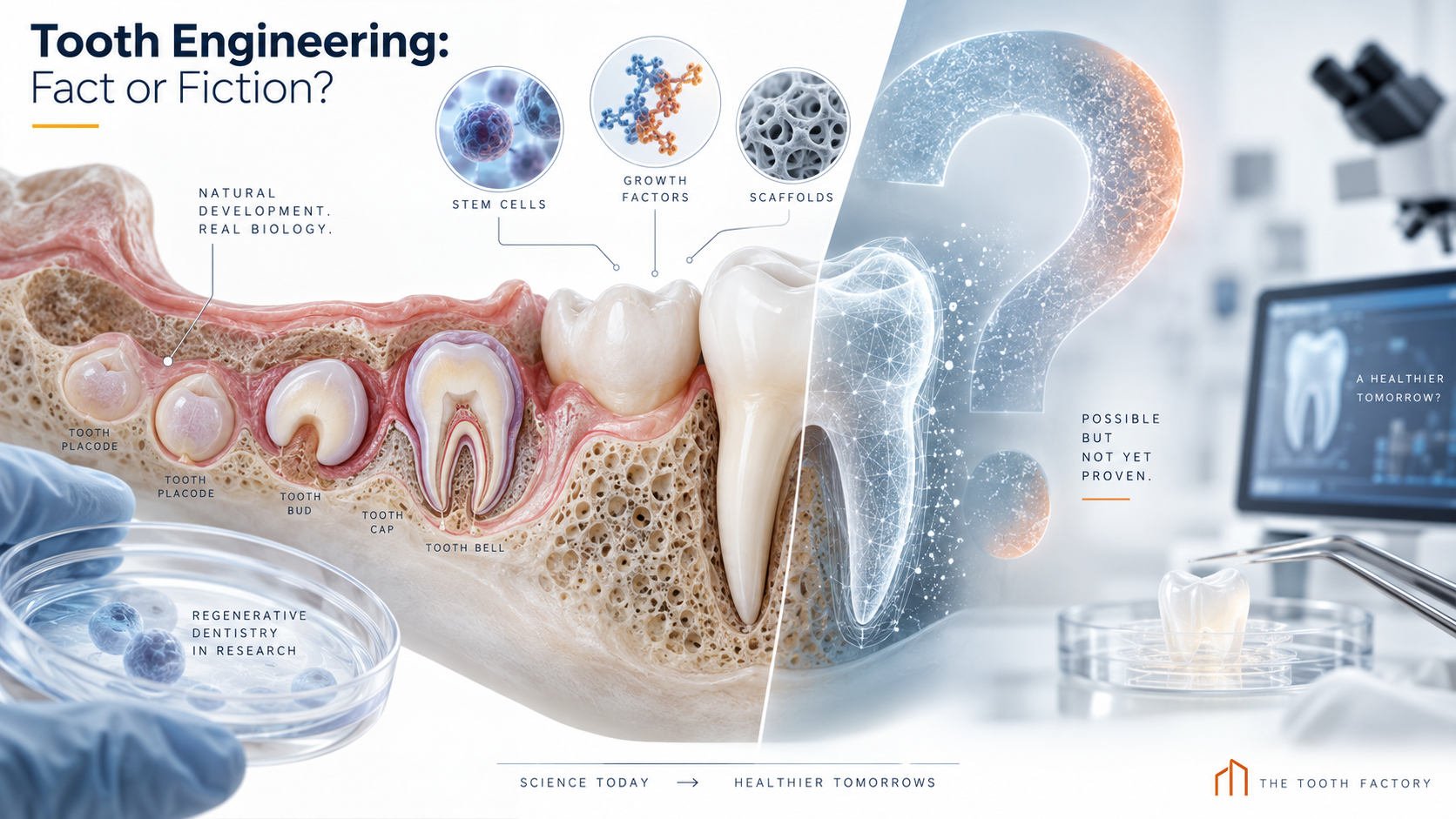
Is This “Tooth Engineering”?
In a broad sense, yes—but it is important to understand what kind.
Traditional tissue engineering often imagines building replacement tissues using combinations of:
- stem cells
- biological scaffolds
- growth factors
- laboratory culture
Scientists around the world are investigating these approaches for dental pulp, periodontal tissues, bone and even whole-tooth regeneration.
The Japanese TRG035 program takes a different route.
Rather than building the tooth externally and transplanting it, the strategy is a form of molecular regenerative medicine:
change a biological signal and allow the body to do the engineering.
Are Other Parts of Teeth Being Regenerated Too?
Yes.
Tooth regeneration is much larger than simply trying to grow an entire replacement tooth.
Researchers are investigating regeneration of:
- dental pulp
- dentin-pulp complexes
- periodontal ligament
- alveolar bone
- cementum
- whole teeth
Japan also has registered human research involving transplantation of dental pulp stem cells following root-canal treatment.
So although the idea of a completely new tooth receives the headlines, a broader revolution in regenerative dentistry is developing quietly underneath it.
Could We Really Be Growing Teeth by 2030?
The research team has publicly discussed a goal of bringing a treatment for congenital tooth agenesis to patients around 2030.
That should be understood as a development target—not a guarantee.
Clinical trials can reveal unexpected safety issues, insufficient effectiveness, problems with dosing, difficulties controlling tooth development, or other obstacles that cannot be predicted from animal research.
The next few years therefore matter enormously.
For the first time, the question is shifting from “Can mammals grow another tooth?” toward “Can we turn that biology into a safe dental treatment for people?”
The Tooth Factory Takeaway
Humanity has spent thousands of years trying to replace missing teeth.
We used carved materials.
Then dentures.
Then bridges.
Then titanium implants.
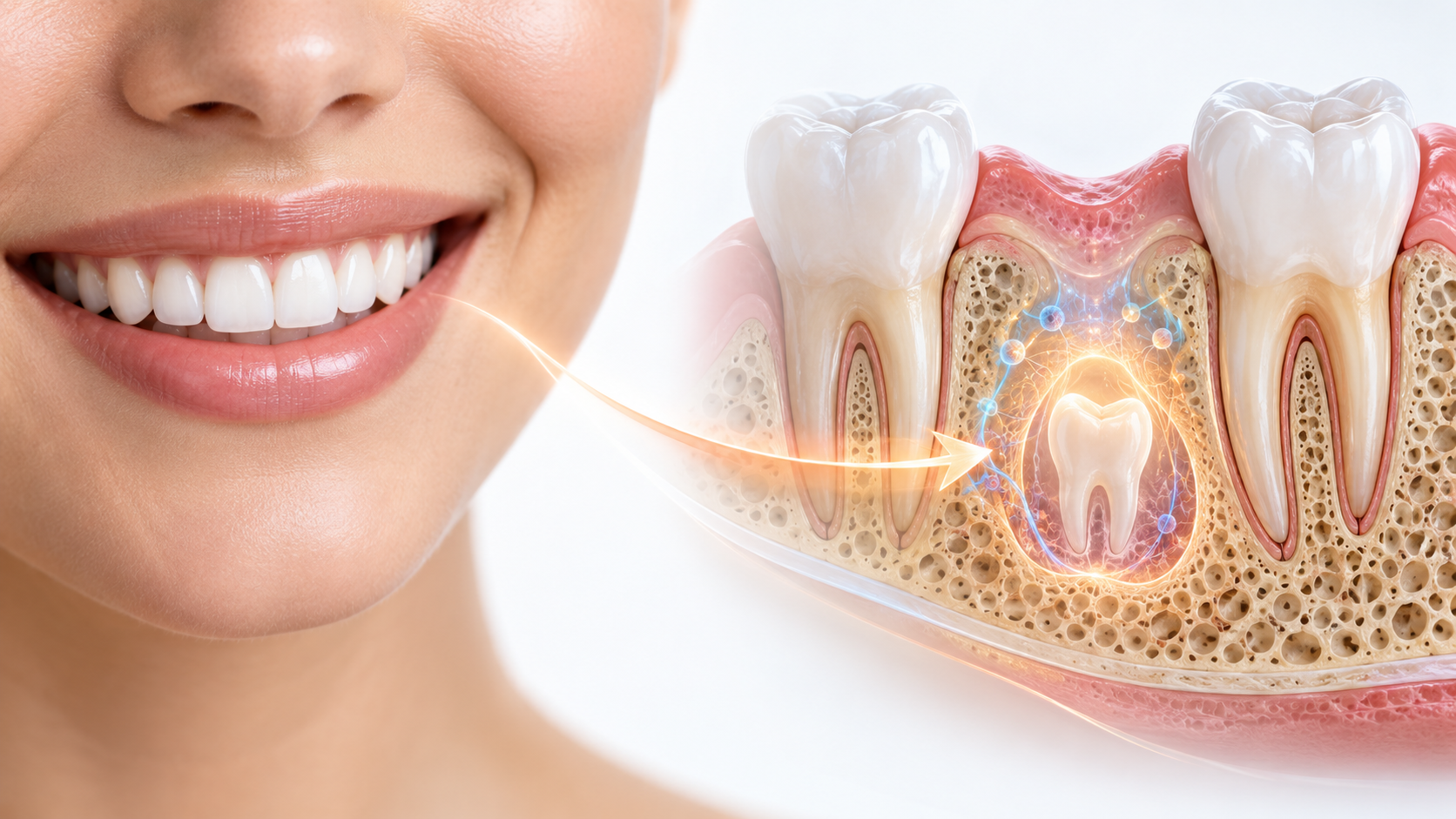
And now researchers are asking whether the next great tooth replacement might not be manufactured at all.
It might be grown.
The Japanese TRG035 program does not mean that dentists can currently inject a patient and grow a replacement molar.
It does mean something genuinely significant:
A biological pathway capable of influencing tooth number has moved from animal research into human drug development.
The initial goal is to help people born with missing teeth.
Whether that eventually expands to millions of adults who lose teeth from disease or trauma remains unknown.
But if scientists eventually learn how to safely control where, when and what type of tooth develops, restorative dentistry could look very different.
Maybe the future question will no longer be:
“Implant, bridge or denture?”
Maybe it will be: “Should we grow you another tooth?”
About The Tooth Factory
The Tooth Factory makes dentistry easier to understand while exploring the science, technology and ideas shaping the future of oral healthcare.
We publish two free dental and oral-health articles every week.
www.thetoothfactory.ca
YouTube: @TheToothFactory
References & Further Reading
1. Murashima-Suginami A, et al. Anti-USAG-1 therapy for tooth regeneration through enhanced BMP signaling. Science Advances. 2021.
2. Takahashi K, et al. Development of a new antibody drug to treat congenital tooth agenesis. Journal of Oral Biosciences. 2024.
3. Toregem BioPharma. TRG035 tooth-regeneration technology and clinical-development updates.
4. Japan Registry of Clinical Trials. Phase I Single-Administration Study of TRG035 in Healthy Adults.
5. Toregem BioPharma. Completion of PMDA investigation of the TRG035 Phase IIa clinical-trial notification. August 2026.
6. Japan Registry of Clinical Trials. Pulp regenerative therapy using allogeneic dental pulp stem cells.
